Smoky Bracket


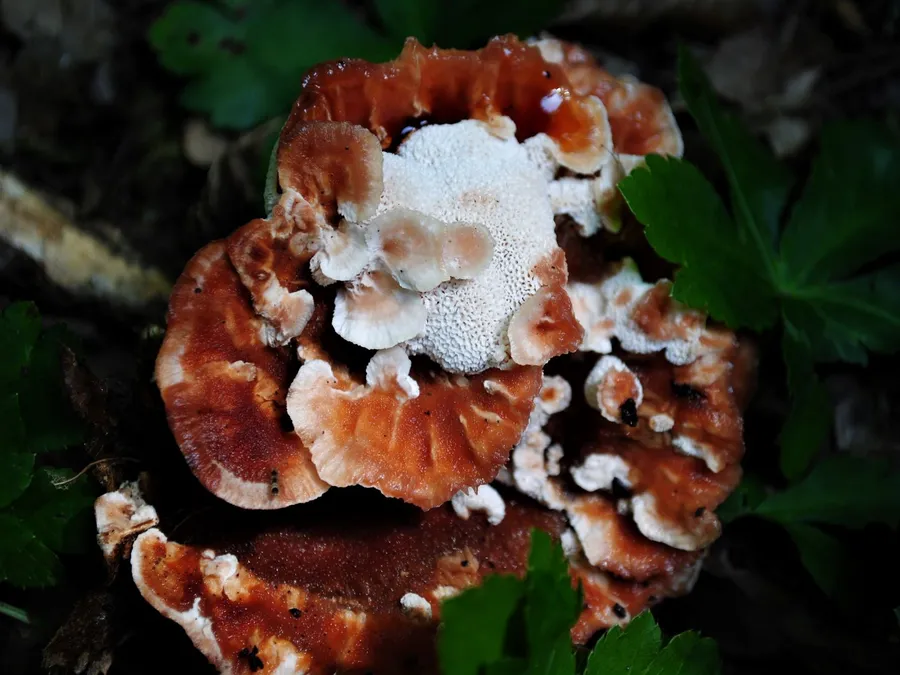
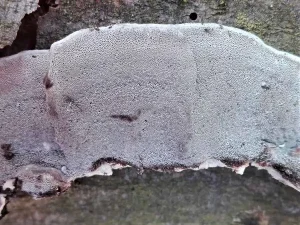
A very common, small, annual polypore mushroom with grey pore surface.
Scientific Name – Bjerkandera adusta

Common Names:
Smoky Bracket (EN), Scorched Bracket (US), Ysgwydd Fyglyd (CY), Szaroporka Podpalana (PL), Szenes Likacsosgomba (HU)
Please note that each and every mushroom you come across may vary in appearance to these photos.
Fruiting Body
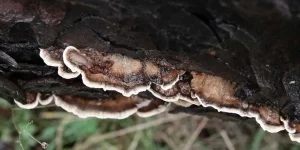
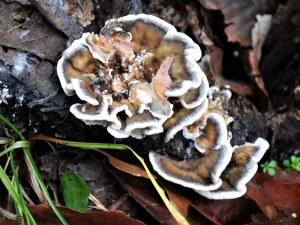
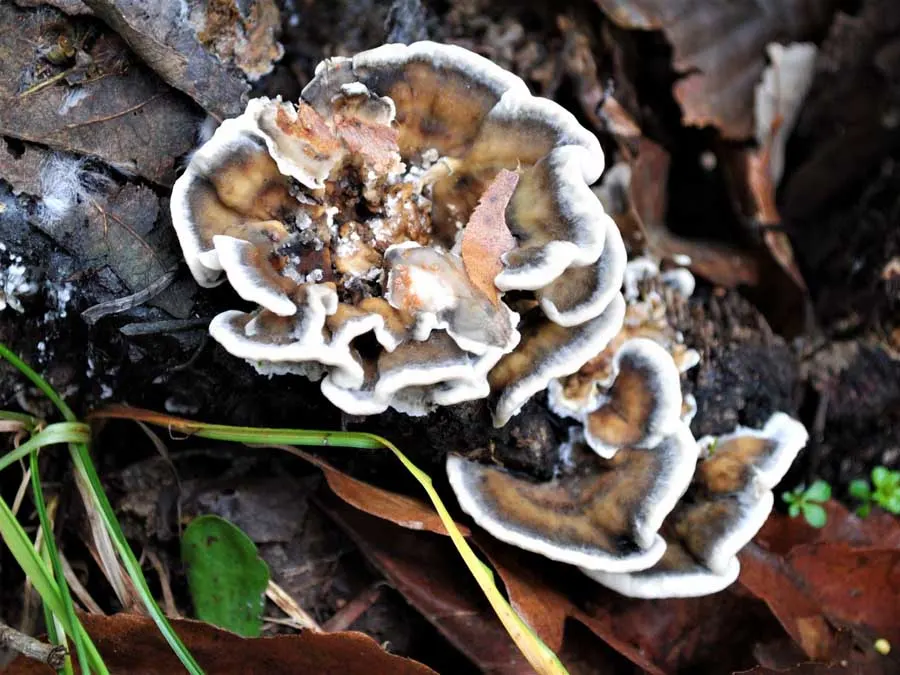
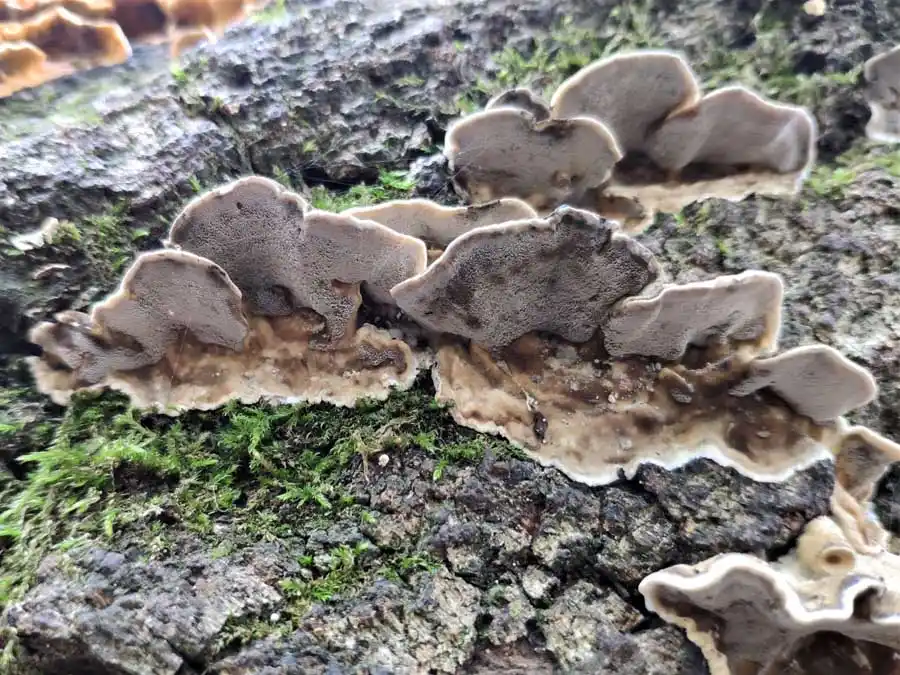
3–7 cm across, thin, convex to nearly flat, fan-shaped or shelf-like, often overlapping or even rosette-like, usually in groups. It could be resupinate if growing on the underside of the host/substrate. Margin is white, blackening with age. Its skin is faintly hairy (tomentose) with faint concentric zones at first, could be almost completely hairless and suede-like with age.

Pores
Tubes up to 1 mm long, pale grey to grey. Pores 4–7 per mm, angular to irregularly rounded, smoke-grey, blackening if damaged.
Flesh
The trama is thin, with a thickness going from few millimetres up to a maximum of 10 mm, of coriaceous-elastic consistency, the colour goes from the whitish to the pale ochre.
Habitat
On the dead wood of hardwoods, especially Beech, but rarely on conifers. Saprotrophic, causes white-rot.
Possible Confusion
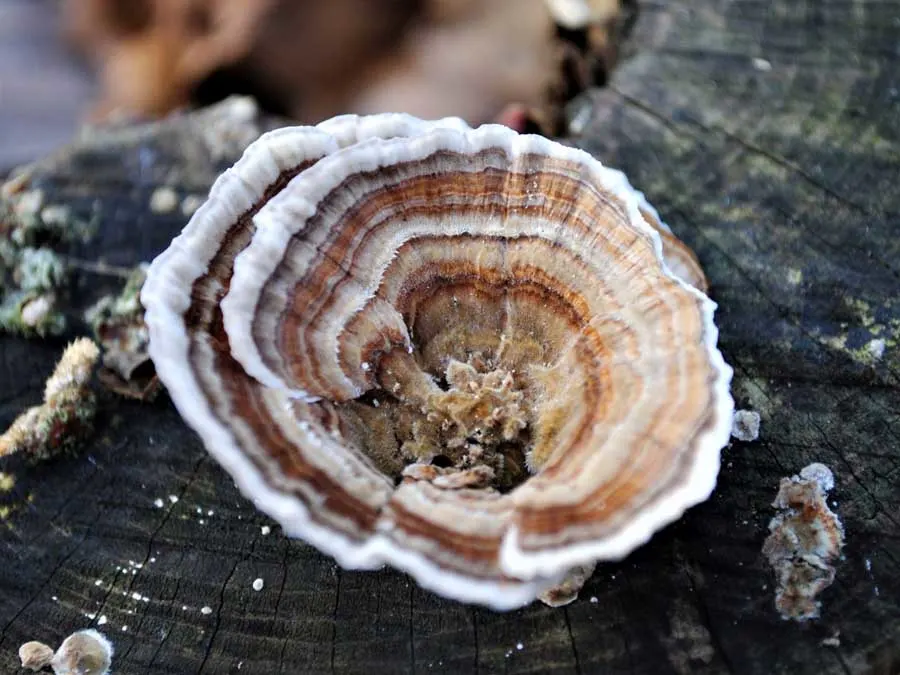
Especially younger fruit bodies could be easily confuse with Turkeytail (Trametes versicolor), pictured, but its skin has more colour and its pore surface is much brighter white. Its close relative, Big Smoky Bracket (Bjerkandera fumosa) somewhat bigger (4–10 cm across), its cap is paler in colour and growing mostly on Sycamore, but also on Alder, Sweet Chestnut or other hardwood genera. There is a dark layer between the two layers of its flesh.
Taste / Smell
Inedible, tastes sour, but it has a somewhat sweet smell.
Other Facts
It is a fairly diffused species in Europe, in North America and also in Asia, in the woods as well as in the parks or in the gardens, on dead wood of broadleaf, more rarely on needle leaved trees, and is origin of white rot of the wood. It is a rather slow-growing parasitic fungus, once installed in the plant it causes its death and continues in developing on it as saprotroph.