Snowy Waxcap
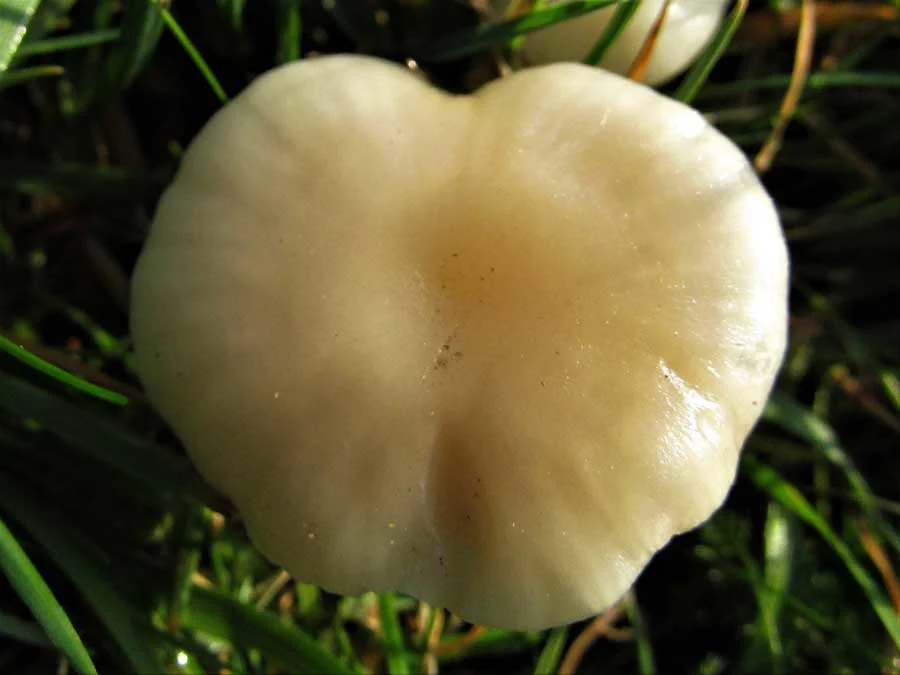


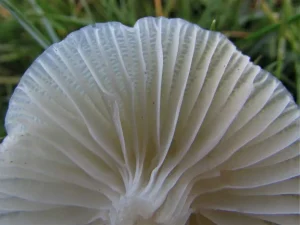
The Snowy Waxcap usually has an ivory or creamy-white cap, with a slightly greasy texture, but not sticky. The centre of the cap may be darker in colur, and brownish or yellowish form do occur. Specimens infected with a mould Metarhizum marquandii may be stained purplish. The few wide spaced gills are decurrent (run down the stem). The cap becomes flattened and often upturned as it matures.
Scientific Name – Hygrocybe / Cuphophyllus virgineus
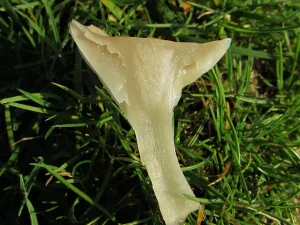
Common Names:
Snowy Waxcap (EN), Cap Cwyr Claerwyn (CY), Kopułka Śnieżna (PL), Fehér Nyirokgomba (HU)
Please note that each and every mushroom you come across may vary in appearance to these photos.
Cap
2-4 cm. White to ivory white. Starting convex but soon flattening and becoming depressed in the middle. As the cap matures the colour generally goes from white to ivory to almost grey/brown.
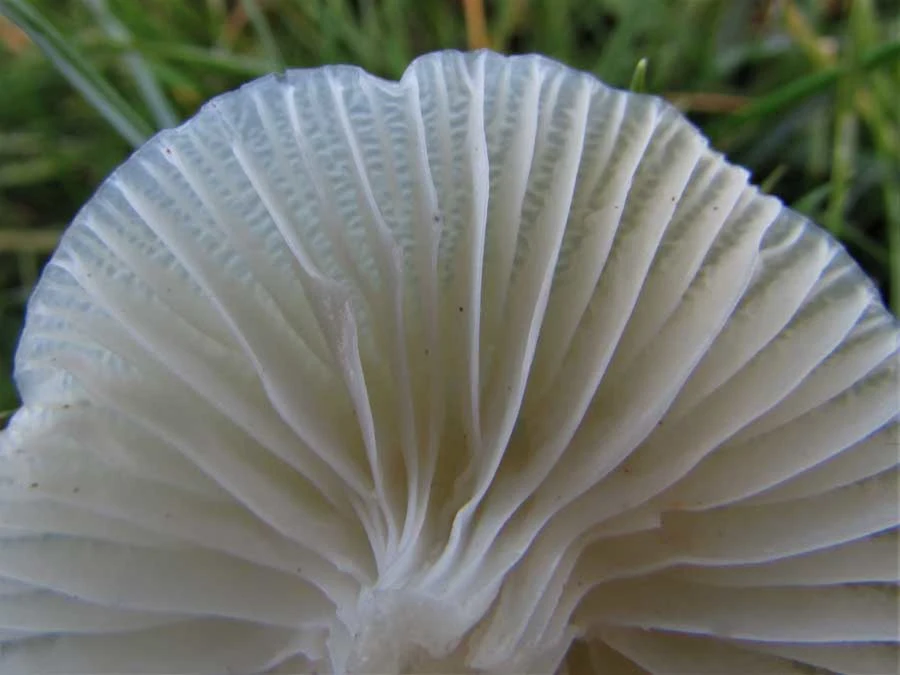
Gills
The gills are white, widely spaced and run down the stem (decurrent). There are veins or very small gills running at right angles between the main gills.
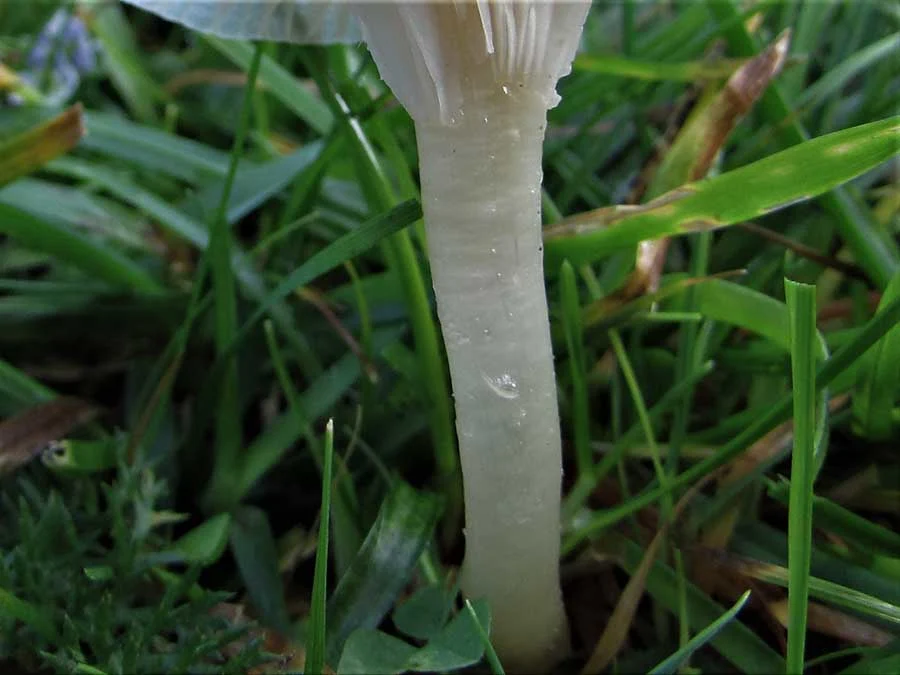
Stem
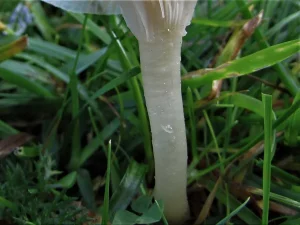
3-5 cm long, 0.3-0.8 cm diameter. White, tapering a bit towards the base and quite often curved.
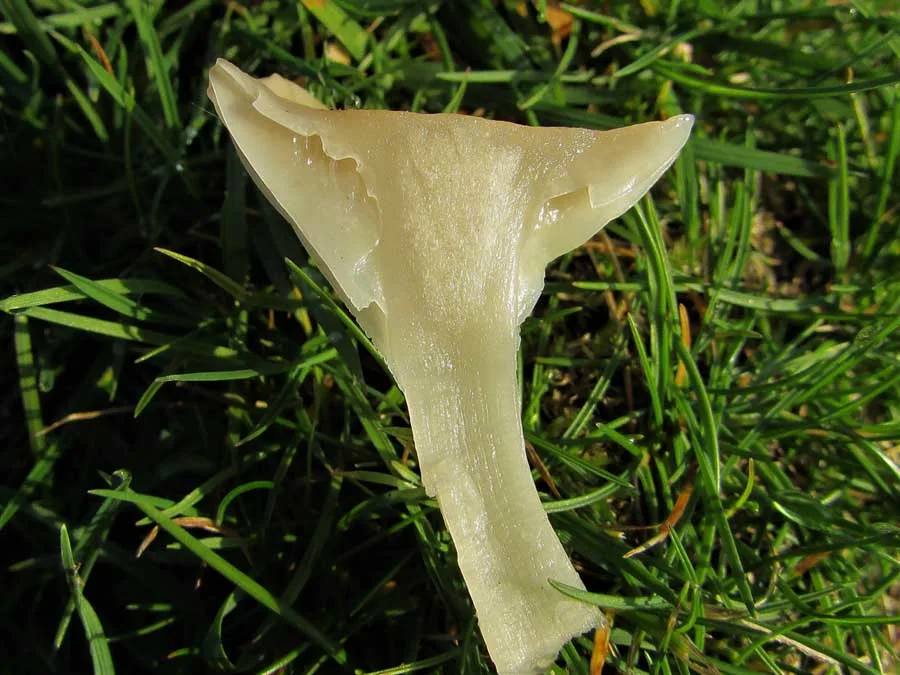
Flesh
Thin except for the centre of the cap.
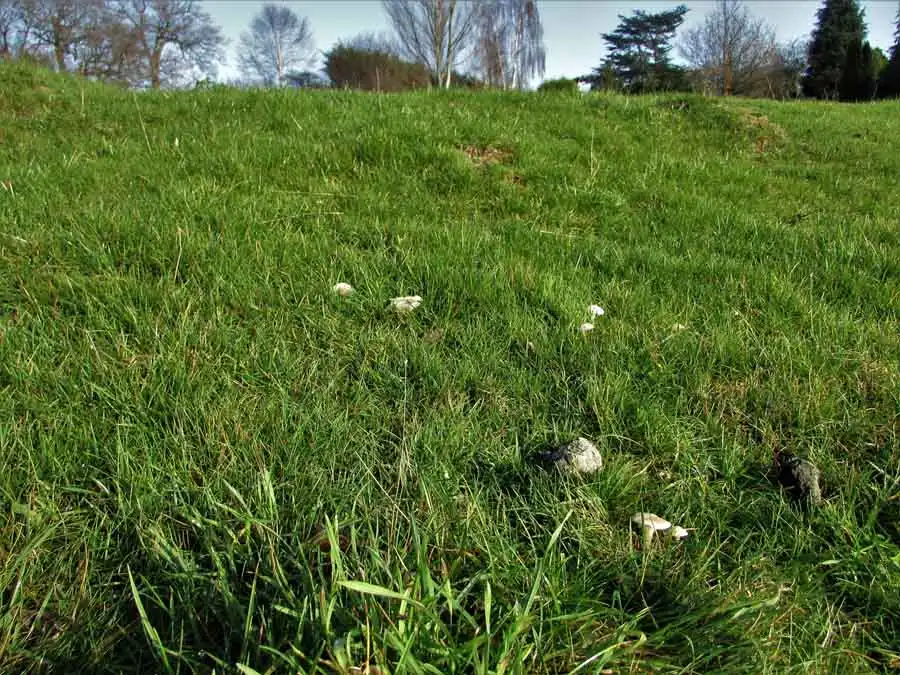
Habitat
In short grass in fields, meadows or commons that have not been intensely farmed.
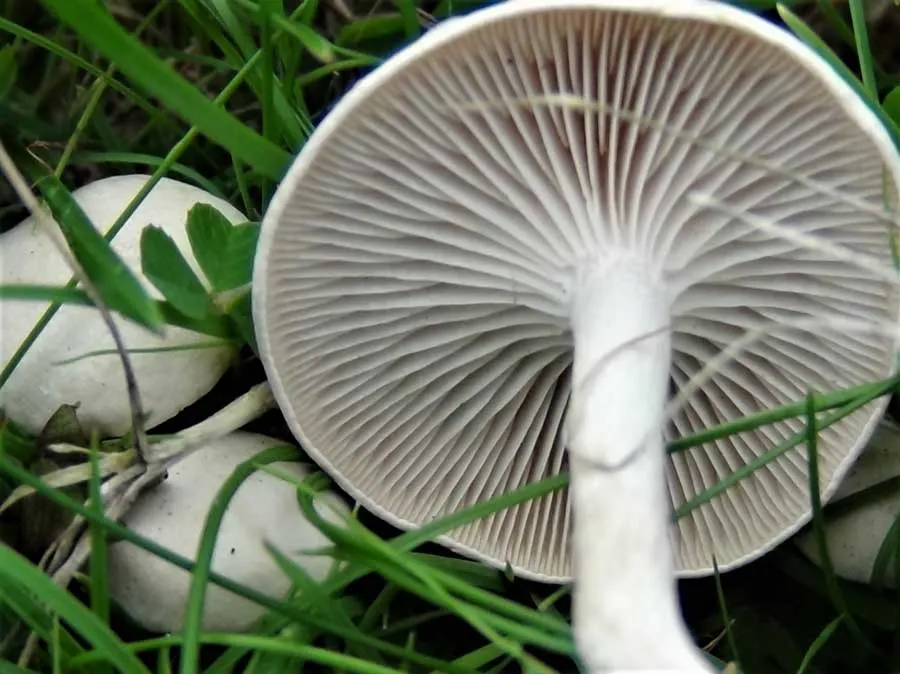
Possible Confusion
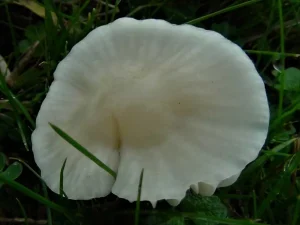
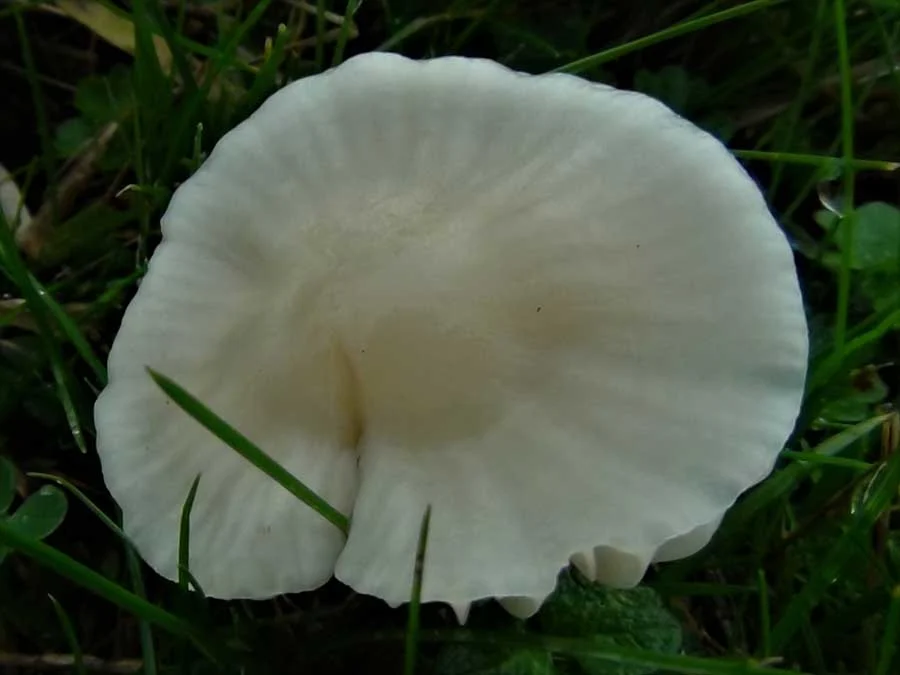
The Clitocybe rivulosa/dealbata, pictured, can look similar but the gills of the Fool’s Funnel are quite crowded and not toothed and they tend to grow in different seasons but care should always be taken when foraging for white mushrooms.
The Cedarwood Waxcap (Cuphophyllus russocoriaceus) has a unique, cedarwood-like smell, its colour is more creamy white.
Other Facts
Care should always be applied when foraging for mushrooms with a white cap, white gills and a white stem as some of the most poisonous mushrooms are white all over. The Snowy Waxcap is probably the most common of the Hygrocybe species seen in Britain and Ireland, and it is one of the few Hygrocybe species that are fairly common also on a European scale. There would be rather less concern if people collected these grassland fungi rather than some of the rarer Hygrocybe species. Some field guides state that Snowy Waxcaps are not only edible but also very good; however, anyone gathering white-gilled mushrooms for food should be aware that some of the most deadly poisonous mushrooms – the Destroying Angel Amanita virosa, for example – are white as also are several grassland species that can cause very unpleasant stomach upsets. Accurate identification is, as always with wild mushrooms, absolutely crucial.