Suede Bolete


Xerocomus subtomentosus, commonly known as suede bolete, brown and yellow bolete, boring brown bolete or yellow-cracked bolete, is a species of bolete fungus in the family Boletaceae. The fungus was initially described by Carl Linnaeus in 1753 and known for many years as Boletus subtomentosus.
Scientific Name – Boletus / Xerocomus subtomentosus

Common Names:
Suede Bolete (EN), Yellow Cracked Bolete, Cap Tyllog Melfedaidd (CY), Podgrzybek Zajączek (PL), Molyhos Tinóru (HU)
Please note that each and every mushroom you come across may vary in appearance to these photos.
Cap
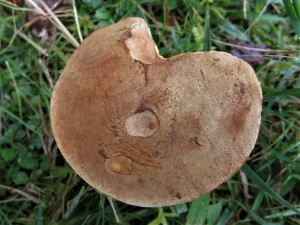
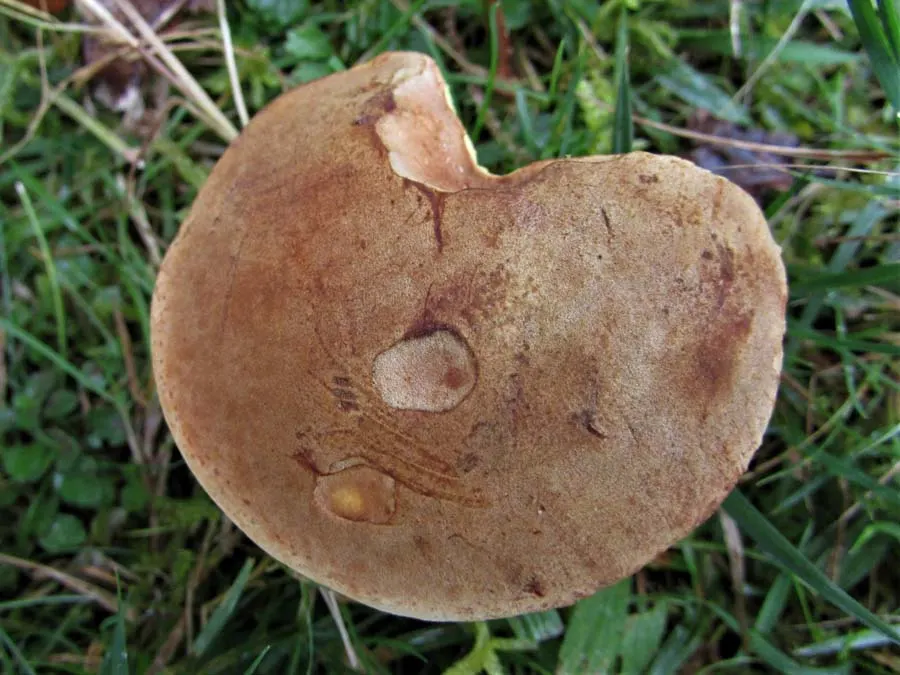
5-10 cm. Starting convex and then flattening out. Very variable in colour from dark brown to tan to olivaceous to yellow and even red. The surface is finely hairy (tomentose) or smooth as it ages and can crack, revealing a yellow or white flesh.

Pores
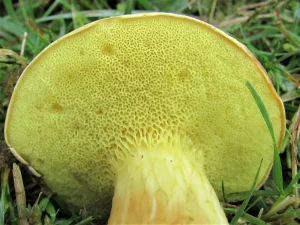
Angular, pale to bright yellow and can be adnate, adnexed, notched or decurrent. Can turn blue where bruised. Xerocomoid Boletes have pore tubes that will generally split in half if the cap is torn apart, other Boletes pore tubes will normally separate and remain whole leaving them unbroken.

Stem
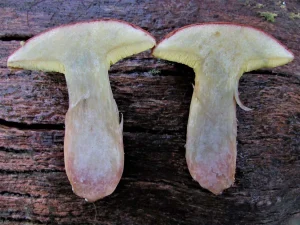
5-10 cm long, 1-2 cm diameter. Can be cylindrical, tapered or club shaped. Usually pale yellow with a pink/brown base and can have course reticulation at the apex. Can look fibrous with tiny floccules.

Flesh
White to pale yellowish, sometimes blueing slightly in the cap but not always. The base of the stem is pinkish brown.

Habitat
Associated with broadleaf trees but can be found with coniferous trees.
Possible Confusion
Rusty Bolete (Xerocomus ferrugineus) is very similar but lacks the pinkish brown in the stem base and has whiter flesh.
Poplar Bolete (Xerocomus silwoodensis) is again similar but has a more pronounced recticulum and grows with Poplar.
Goldenthread Bolete (Xerocomus chrysonemus) has wider pores and yellow hyphal cords joined to the base.
Other Facts
Xerocomus subtomentosus is edible, although not highly regarded. Its mild taste makes it suitable for mixed mushroom dishes. An elemental analysis of specimens collected from western Poland determined the mushrooms to have abundant amounts of the electrolytes potassium, phosphorus, and magnesium, with mean values of 46000, 8400, and 1100 milligramme/kilogramme dry weight, respectively, in the caps. The levels of the toxic metals cadmium, mercury, and lead in the mushrooms “did not pose a threat to a consumer’s health”.