Ascot Hat


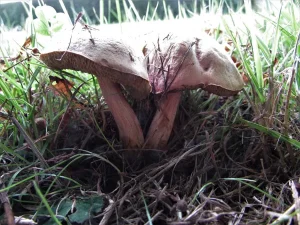
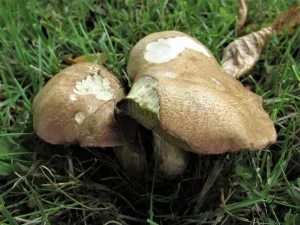
The genus name, Hortiboletus, refers to the latin ‘hortus‘ meaning garden where the Hortiboletus bubalinus can often be found growing with Poplar or Lime trees.
Scientific Name – Boletus / Hortiboletus bubalinus


Common Names:
Ascot Hat (EN), Poplar Bolete, Cap Tyllog Bwff (CY), Parkogrzybek Morelowy (PL), Homoki Tinóru (HU)
Please note that each and every mushroom you come across may vary in appearance to these photos.

Cap
6-10 cm. Pale brown with slight red or yellow hues, lighter towards the edge. Starts of rounded but becoming flatter and more uneven with age.
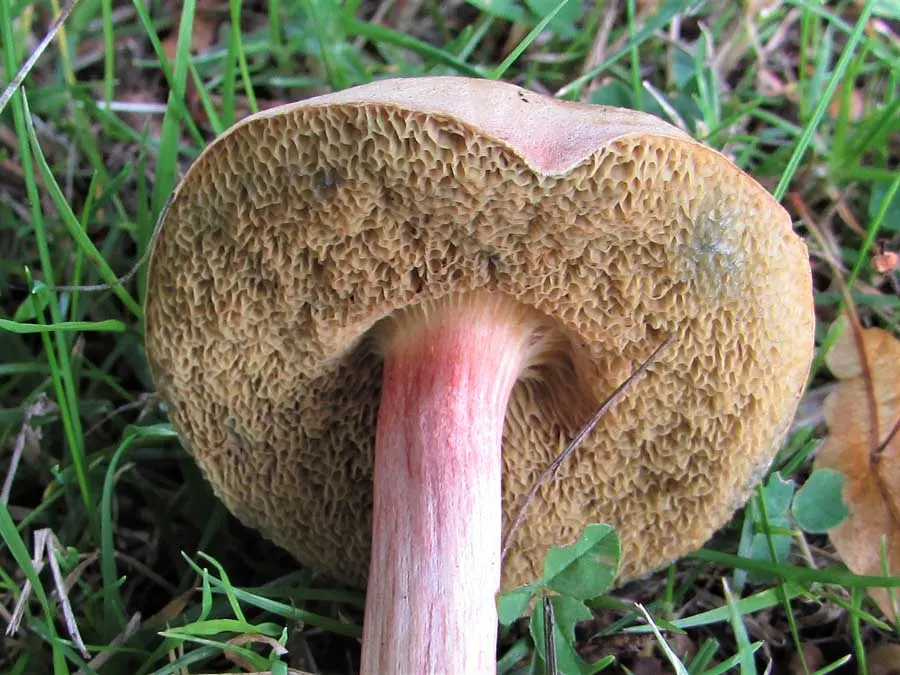
Pores
Yellow to pale yellow sometimes with olivaceous hints. Angular not round and bruising blue/green.
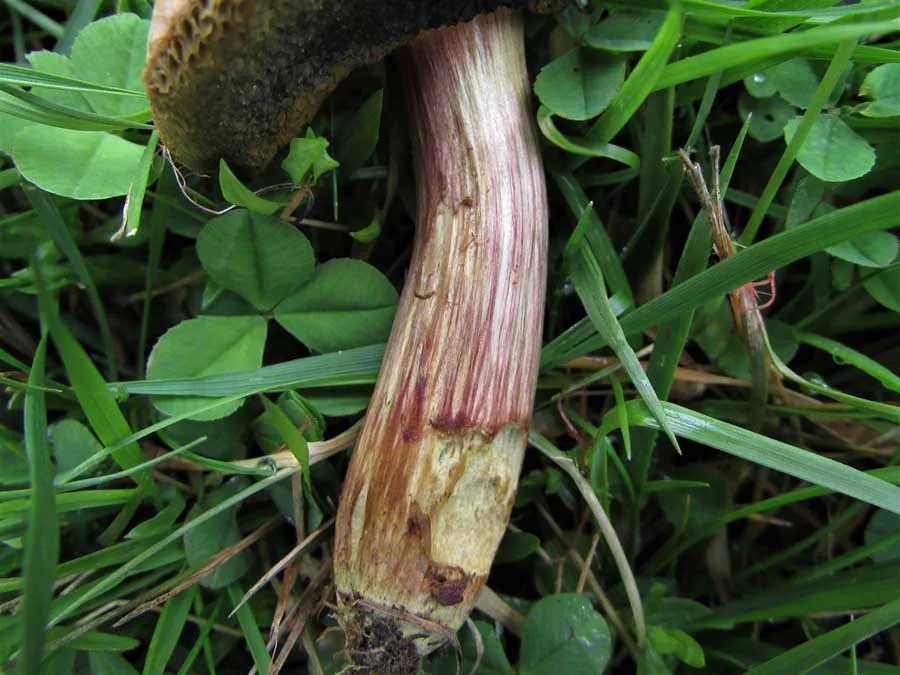
Stem
6-10 cm long, 1-1.5 cm diameter. Fairly thin for a Bolete, pale background covered in vertical red ‘fibres’.

Flesh
Off white/yellow in the stem. White in the cap staining pink under the cuticle and blue above the pores.

Possible Confusion
Other Boletes but none of the poisonous varieties.
Spore Print
Olive brown. Subfusiform.
What are Some Tips for Finding Ascot hat
Investigate the areas around poplar and lime trees in urban park settings or domestic gardens. Inspect the base of hornbeam, birch, beech, and spruce trees for signs of ascot hat. Seek out woodland edges and clearings where sunlight is abundant as ascot hat favors these conditions. Focus on well-drained areas with slightly alkaline soil, avoiding over-watered or acidic terrains. Gently probe the soil around these trees without disturbing the ecosystem, as ascot hat may be hiding just beneath the surface.