Aspen Bolete
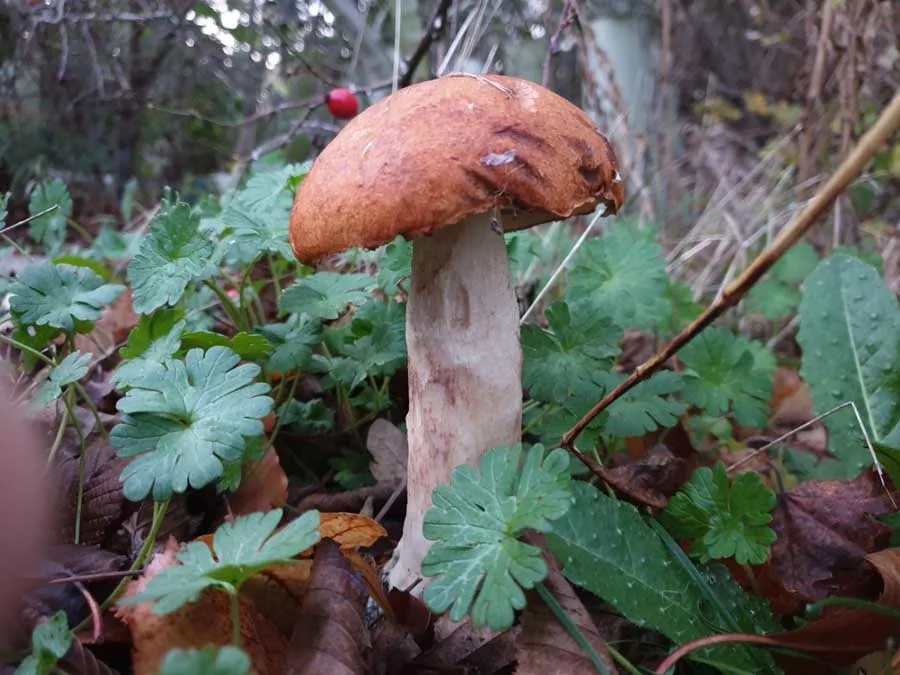


Leccinum albostipitatum (formerly within the Boletus genus) is an edible, high-quality mushroom, often known as the Aspen Bolete, recognized by its bright orange cap, whitish stem with white-to-reddish scales (scabers), and flesh that turns dark violet-grey or black when cut. It grows in symbiotic, mycorrhizal relationships with aspen and poplar trees.
Scientific Name – Boletus / Leccinum albostipitatum


Common Names:
Aspen Bolete (EN), Koźlarz Białotrzonowy (PL), Vörös Érdestinóru (HU)
Please note that each and every mushroom you come across may vary in appearance to these photos.

Cap
5-10 cm. Orangey red, domed even in mature specimens. Flaps of skin hanging over the edge up to 6mm lasting into maturity.
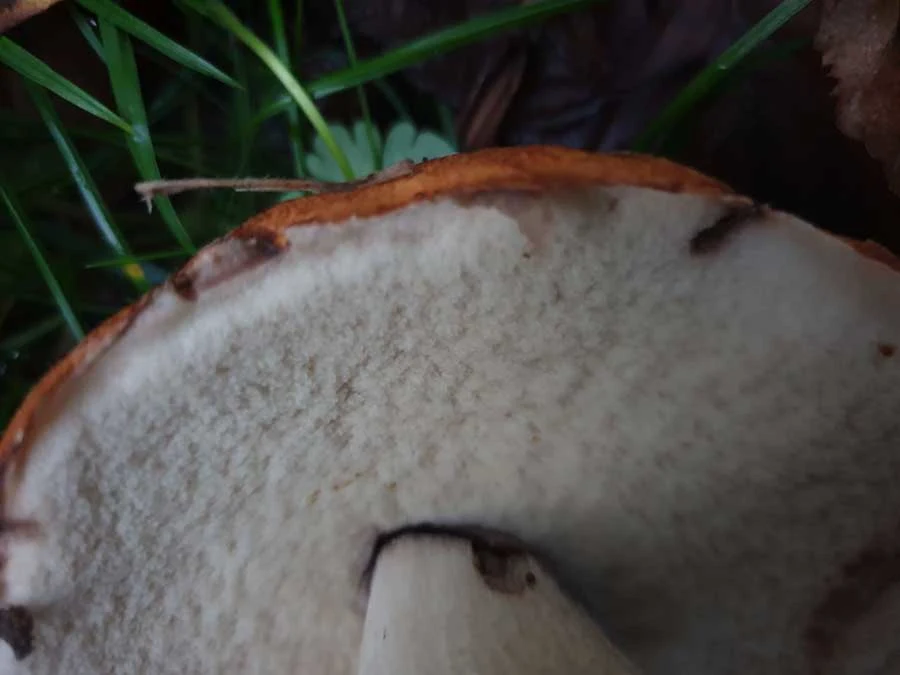
Pores
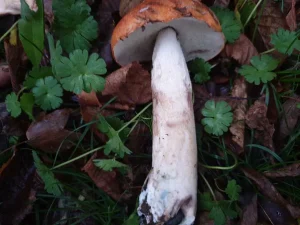
Off white to grey small round pores.
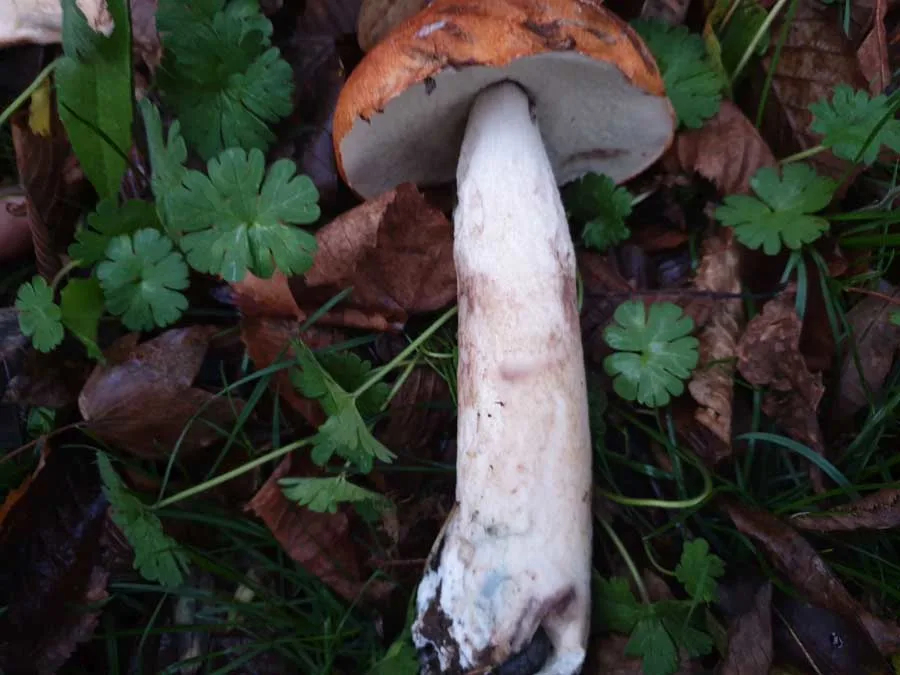
Stem
7-20 cm long and 2-5vcm diameter. Proportionally long. Very solid, tapering towards the cap. White with floccules (small raised protrusions found on the stem of the Leccinum genus). These floccules can be a gingery/foxy colour in some areas, but never dense dark brown. Base can be swollen and blue.

Flesh
Firm, thick. White at first, then sometimes turning wine red, then greys to almost black. Sometimes turning blue in the base.
Habitat
Strictly associated with Aspen (Populus tremula) and Poplar, found in mixed forests and sandy soils, mostly in Europe.
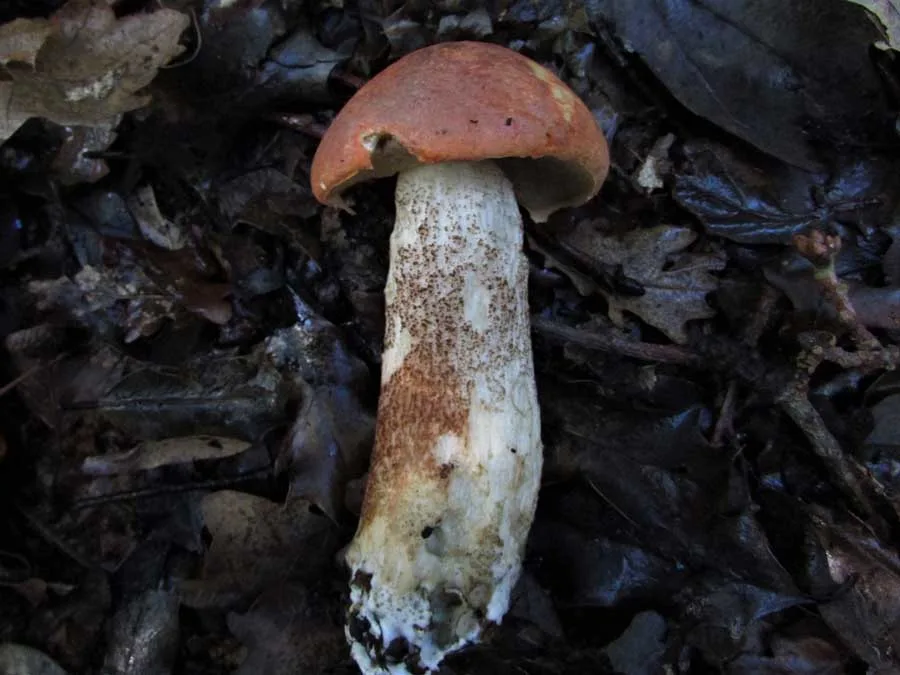
Possible Confusion
The Orange Bolete (Leccinum aurantiacum) is very very similar. The stem has darker ‘floccules‘, and the cap is a redder, more foxy colour. Orange Birch Bolete (Leccinum versipelle), pictured, is very similar but only grows with Birch, has a lighter cap colour and has dark brown to black floccules on the stem unlike the orange/brown floccules of the Orange Bolete.
Spore Print
Olivaceous brown. Ellipsoid to fusiform.
Other Facts
This has been known by the name Leccinum aurantiacum for many years due to a mistake by the original scientist who described it. Later studies decided that this was incorrect and taxonomic law meant that the name had to be applied to a different mushroom – so a new name was given to this species. All very confusing, but new work has clarified the matter.
The cap reaches 80–250 mm in diameter and is hemispherical when young, maturing to convex or plano‑convex. Its surface is finely tomentose and fibrillose, displaying a vivid orange that may fade toward the margin in older fruit‑bodies and often cracks slightly with age. The stipe measures 50–270 mm in length and 15–50 mm in thickness, initially whitish and densely clothed in fine white squamules that darken to light brown in mature specimens; handling typically induces a clear blue bruise. The flesh is white in the stipe base but turns vinaceous to greyish‑black when cut in the cap. Tubes are 9–30 mm deep, adnate to slightly decurrent, with pores about 0.5 mm wide that bruise brown. Microscopically, spores measure (9.5–)11.0–17.0 by 4.0–5.5 μm, spindle-shaped (fusiform) with a conical apex and shallow suprahilar depression. Basidia are 25–35 by 7.5–11.0 μm and four‑spored. Hymenial cystidia measure 20–45 by 7–10 μm (lageniform). The cap cutical (pileipellis) is a cutis of narrow cylindrical elements (35–80 by 4.0–15.5 μm) that appear yellowish‑brown in water. Caulocystidia are 15–65 by 10.0–16.0 μm, clavate to fusiform. Clamp connections are absent.