Bay Bolete
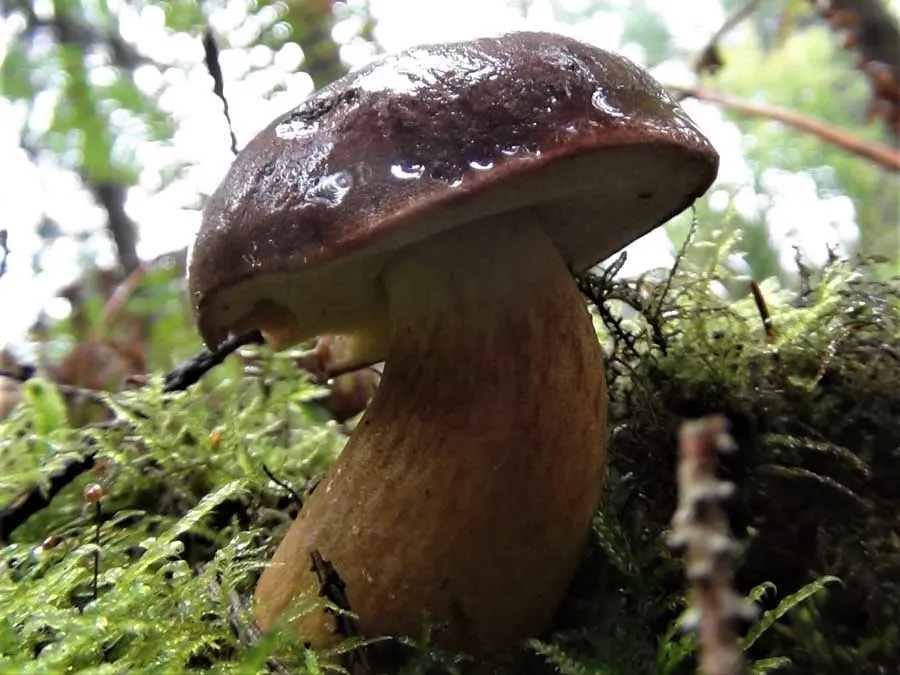


The Bay Bolete is a great mushroom and not far from the Penny Bun in gastronomic value. So much so, we could not differentiate between the two in a blind taste test, with only the less firm texture of the Bay Bolete giving it away.
Scientific Name – Boletus / Imleria badia


Common Names:
Bay Bolete (EN), Cap Tyllog Gwinau Cleisiog (CY), Podgrzyb Brunatny (PL), Barna Tinóru (HU)
Please note that each and every mushroom you come across may vary in appearance to these photos.
Cap
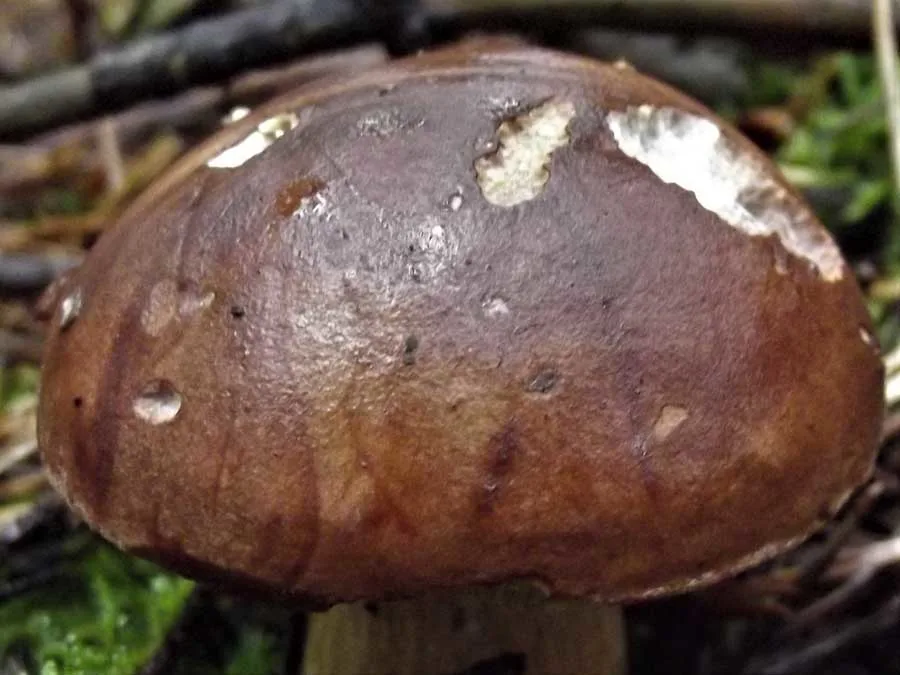
5-8 cm. Often starts spherical opening to convex and flattening with age. A bit velvety when young, smooth and shiny when mature. Dark brown or brown/brick coloured, slightly slimy when wet.

Stem
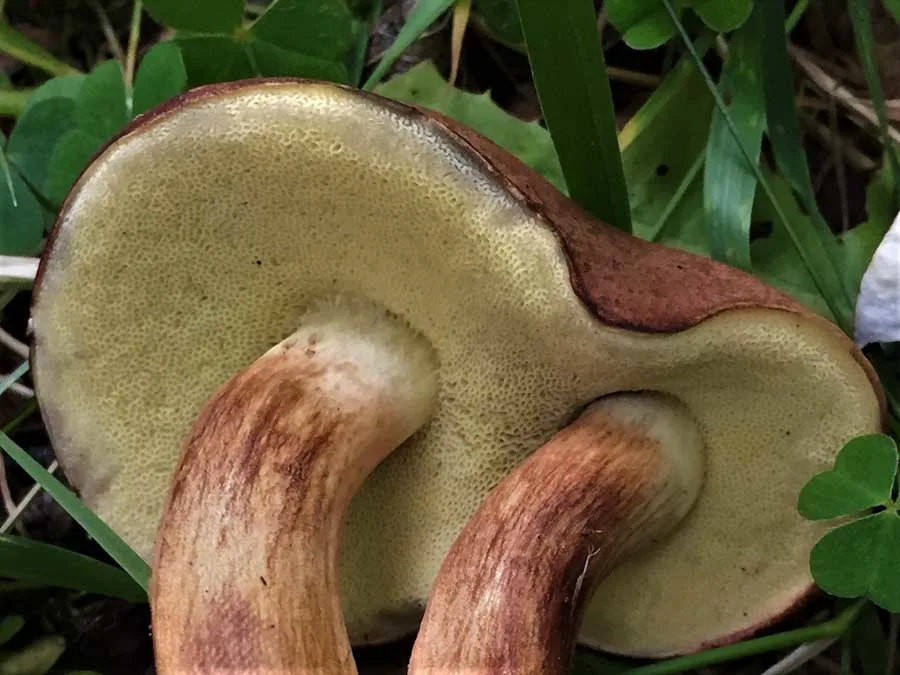
5-8 cm long, 1-4 cm diameter. Pale brown looking vertically fibrous over a paler yellow/tan background. Can be quite thick.

Flesh
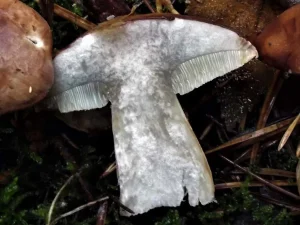
White/pale yellow. Staining pale blue/green on cutting especially in the cap.
Habitat
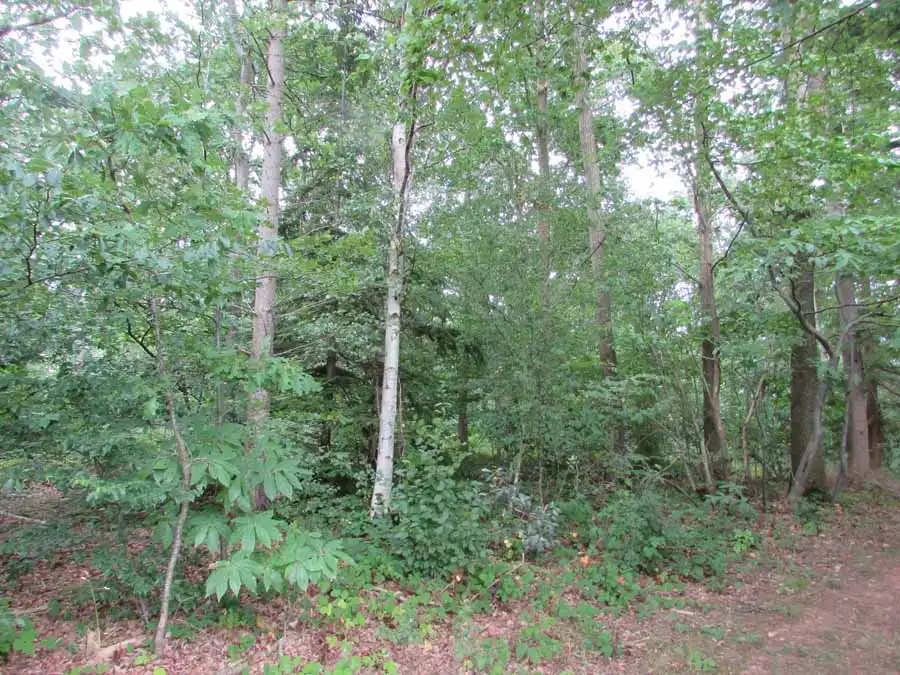
Mixed woodland.
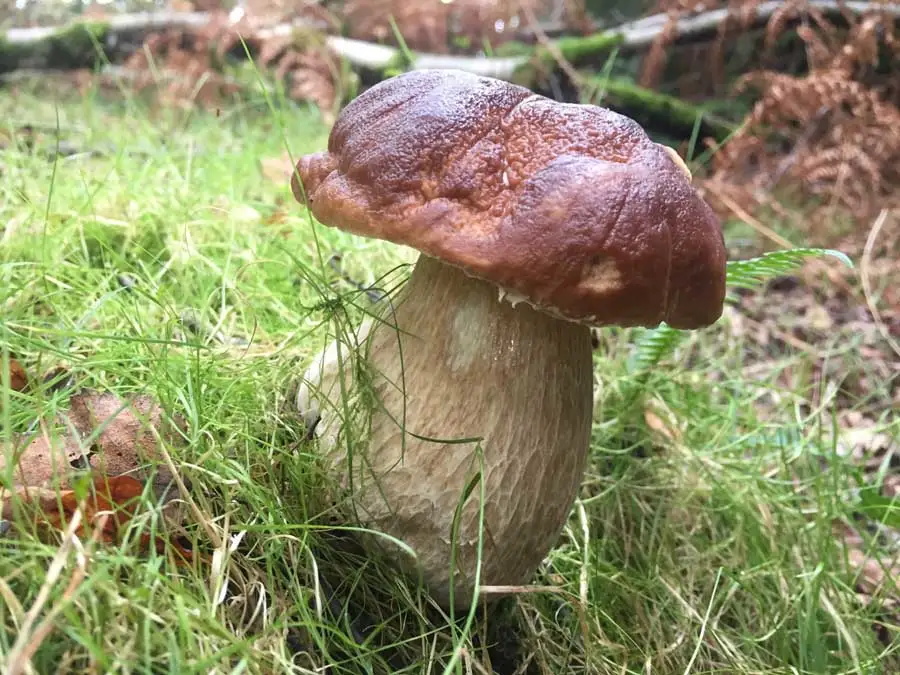
Possible Confusion
Can look like other Boletes (see Penny Bun, pictured,) but if you stick to the simple rule of avoiding any Bolete with red on the stem, pores or cap and any Bolete whose flesh turns rapidly blue when cut you will only pick edible Boletes. You will be missing out on some good edibles with that rule but you will be keeping yourself 100% safe.
Spore Print
Green/brown. Subfusiform.
Other Facts
Often considered a poor relation of the cep (Boletus edulis), the bay bolete is nevertheless highly regarded as a choice edible mushroom by some authors such as Carluccio. In central Mexico, it is collected from Izta-Popo Zoquiapan National Park and sold in neighbouring markets. It may cause an allergic reaction in some people, and the blue discolouration upon bruising can be offputting, although the staining disappears from white flesh when it is cooked. The flavour is milder than its better-known relative. Younger specimens are best for eating, though more mature ones can be suitable for cutting up and drying. The tendency for the pores to absorb water means that wiping rather than washing is recommended before use in the kitchen. Unlike most boletes, I. badia can be eaten raw (though only young mushrooms should be used). Otherwise it can be fried in butter, or used with meat or fish recipes. Mushrooms can also be frozen, dried, or pickled in cider vinegar, wine, or extra virgin olive oil, and later used in sauces or soups.