Warted Amanita
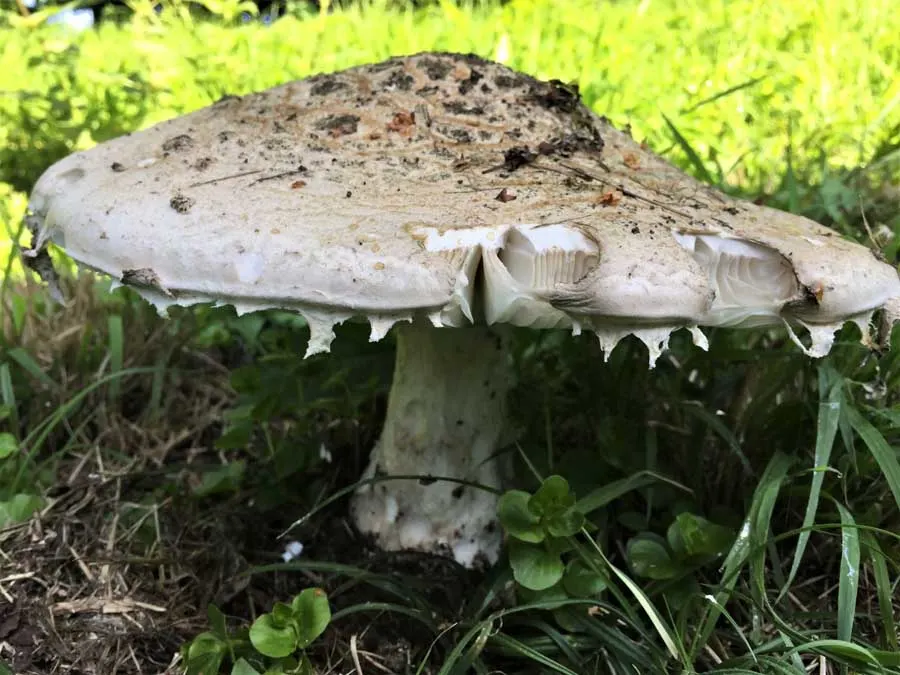


A very robust (chunky) rare white Amanita. Large, solid, and almost clublike before the cap opens. This is a mushroom that can be spotted from a hundred metres away and with care identified despite there being a number of white Amanita.
Scientific Name – Amanita strobiliformis



Common Names:
Warted Amanita, Amanita Ddafadennog (CY), Muchomor Szyszkowaty (PL), Cafrangos Galóca (HU)
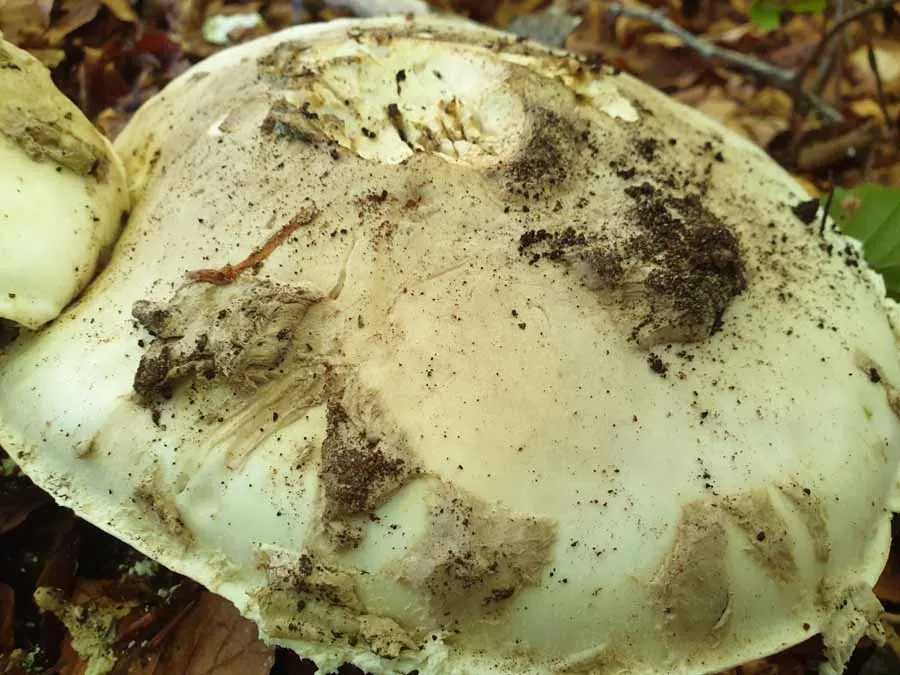
Cap
10–20 cm in diameter when opened, starting off domed and flattening out with maturity. White or off white with large dirty grey lumps of veil attached. These hang around and off the edge.

Gills
Very white, crowded, adnexed (gills attached with less than full depth to stem) which is unusual for the Amanita genus which are usually free.

Cortina / Veil
Fragments of the veil adhere to the cap and margins of the cap as large grey scales

Stem
10–20 cm long, 2–5 cm diameter. Very substantial and club like, white, rough and mealy. There is no substantial volva like some Amanita but there are flaky remnants ringing the bottom of the stem.

Skirt
The skirt is quite large but very insubstantial almost lacy and high up the stem (superior). It is easily broken by handling or disturbance reducing it to a short fragment sitting on the stem.
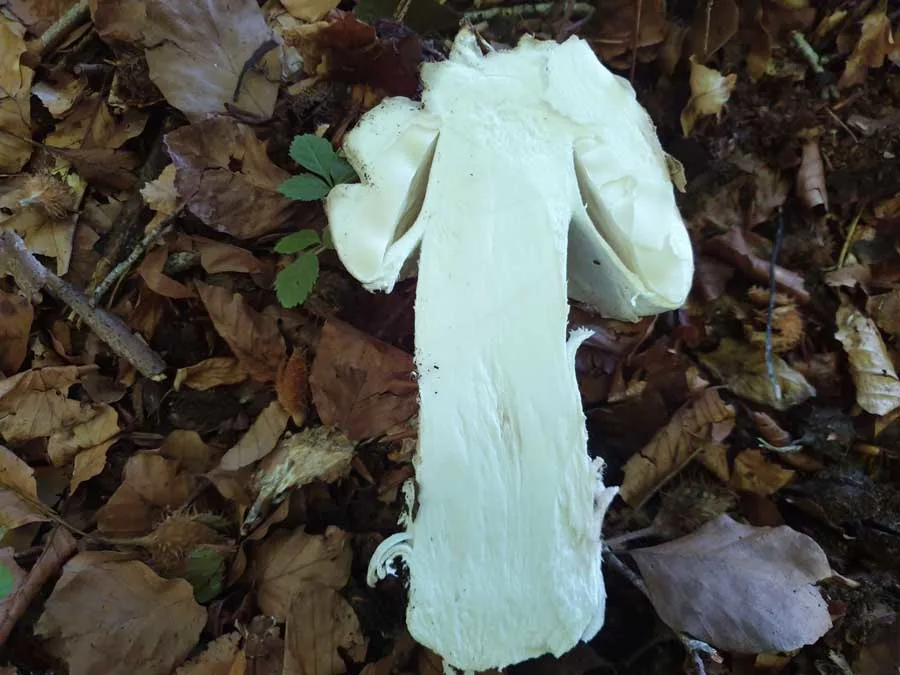
Flesh
White unchanging.
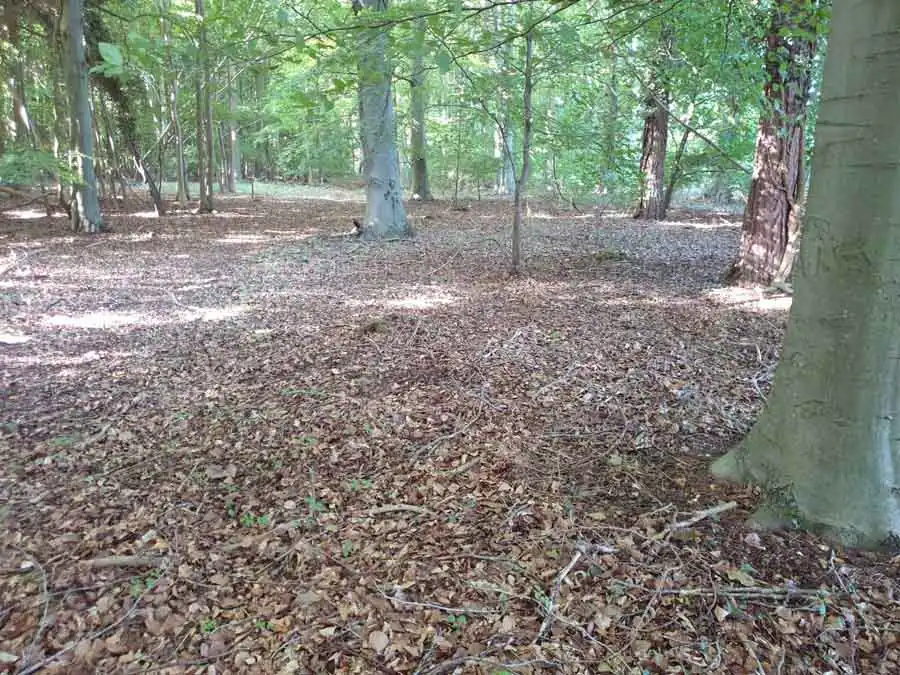
Habitat
Mycorrhizal with deciduous trees
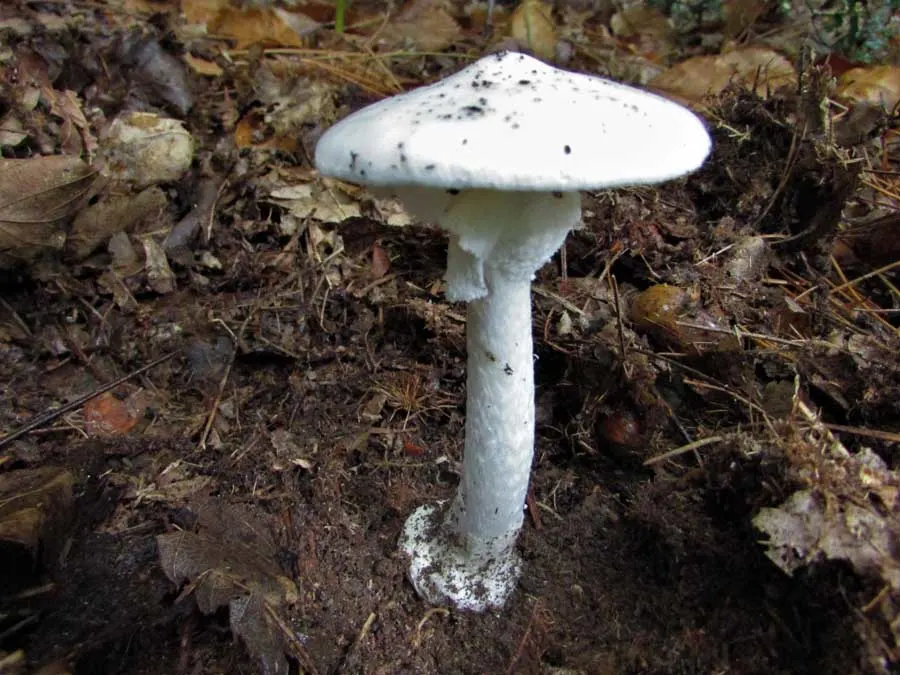
Possible Confusion
In foraging terms this closely resembles many other deadly Amanita. However the more common Amanita, like the Deathcap (Amanita phalloides) or the Destroying Angel (Amanita virosa), pictured, all have white forms but have obvious volva and less substantial scales. There are several uncommon Amanita/Saproamanita that are very similar, but again these have either obvious volva, are less robust, or inhabit different habitats.
Spore Print
White
Other Facts
Although some sources suggest that Amanita strobiliformis is an edible species, there are also reports that it may contain the psychoactive chemical compounds ibotenic acid and muscimol that occur in such hallucinogenic species as Amanita muscaria and Amanita pantherina. Many modern field guides warn against collecting Amanita strobiliformis because of the possibility of confusion with deadly poisonous Amanita species, and so my advice is that it should definitely not be gathered for eating.