The Blusher
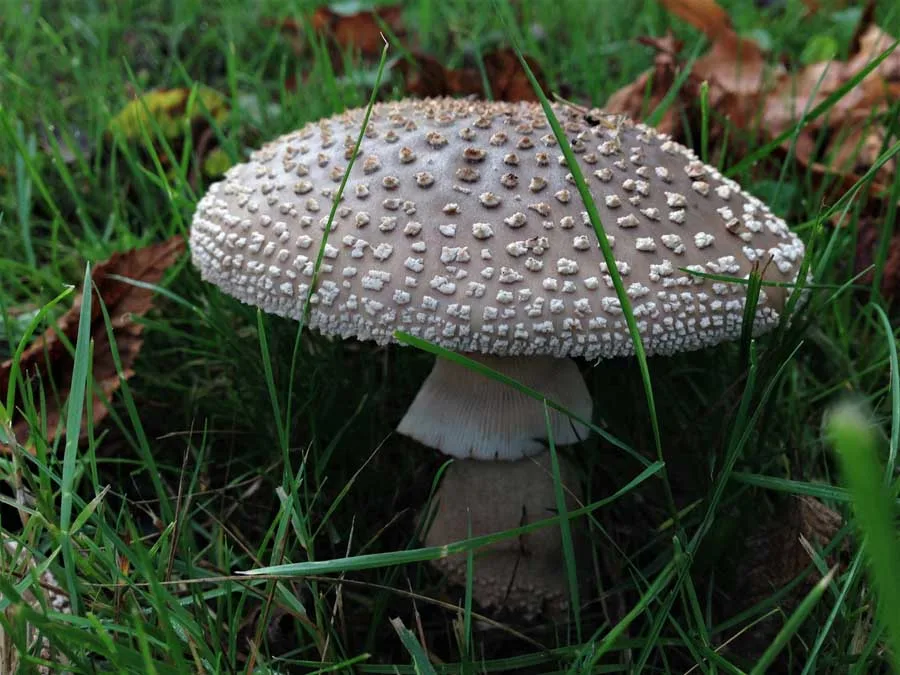


Common and available before many other species are out, this is a good eating mushroom but difficult to identify for the novice forager and must be well cooked before consumption. Great care should be taken identifying this fungi.
Scientific Name – Amanita rubescens
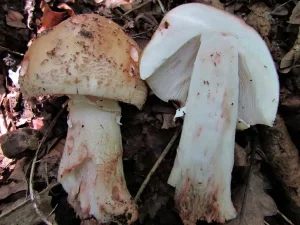

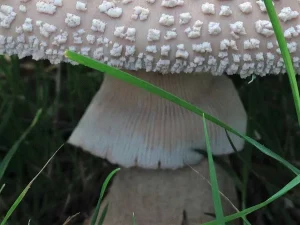
Common Names:
The Blusher (EN), Amanita Wridog (CY), Muchomor Czerwieniejący (PL), Piruló Galóca (HU)
Please note that each and every mushroom you come across may vary in appearance to these photos.
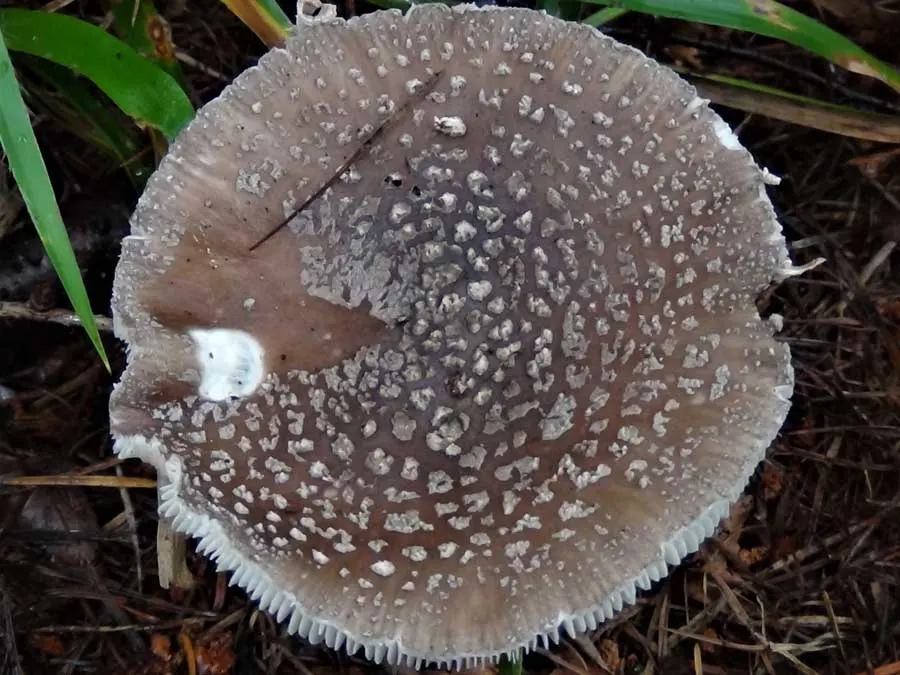
Cap
8-12 cm. Flesh coloured to light brown to a darker red/brown sometimes with a yellow flush and covered in off-white to grey scales. Spherical to convex to flat.
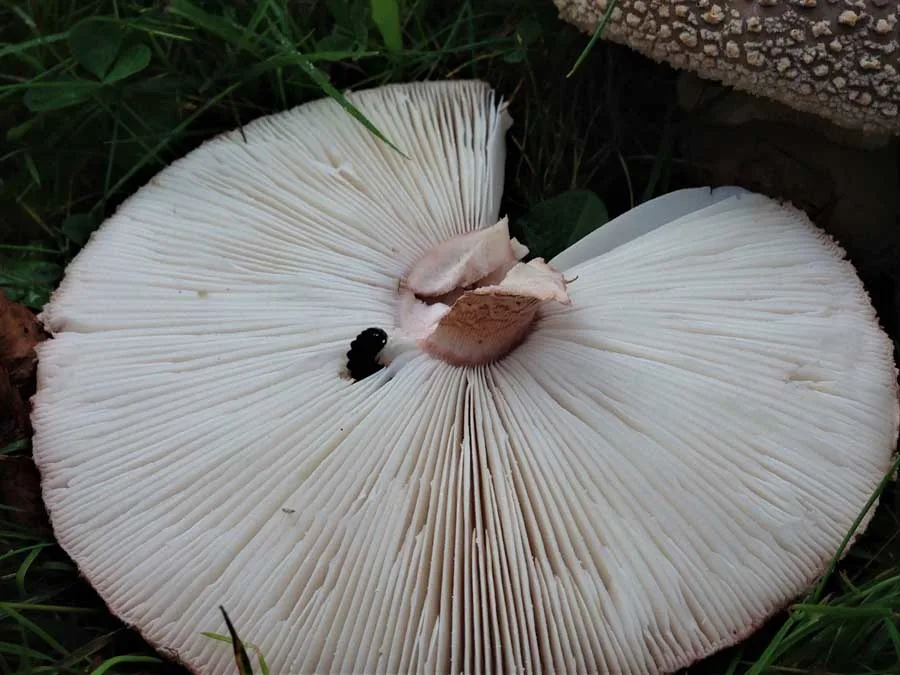
Gills
Crowded and free of the stem. Can develop pink to red spots where damaged.

Stem
9-12 cm long, 1-2.5 cm diameter. Scaly and off white to grey/red/brown below the skirt, generally smoother and whiter above.
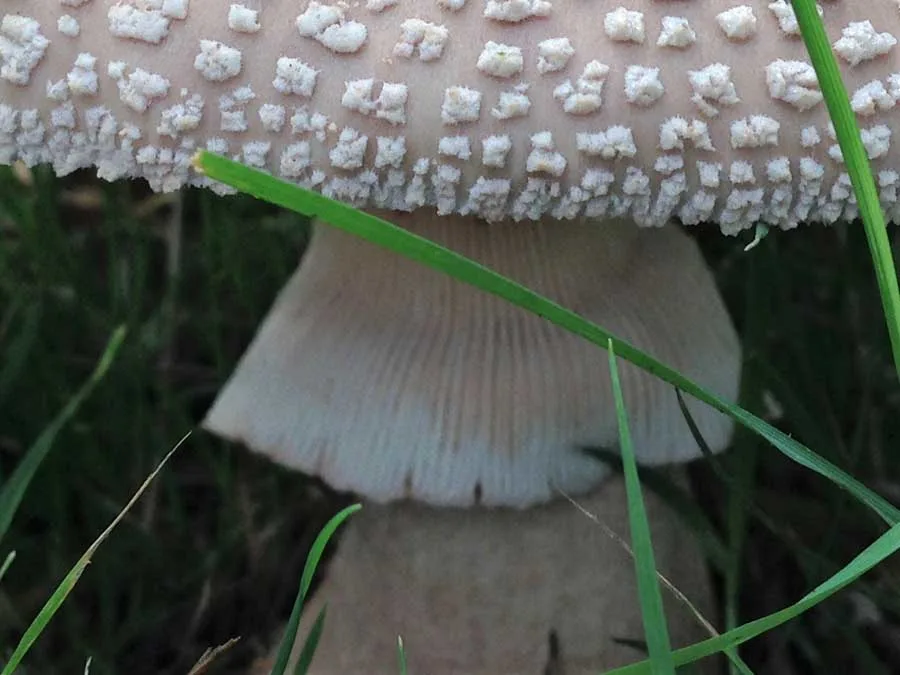
Skirt
Superior. The skirt is an important identification tool as the top has fine grooves or striations running from the stem outwards.

Volva
Young Blushers have an obvious volva but as the mushroom matures the bottom of the stem is bulbous rather than being marginate.
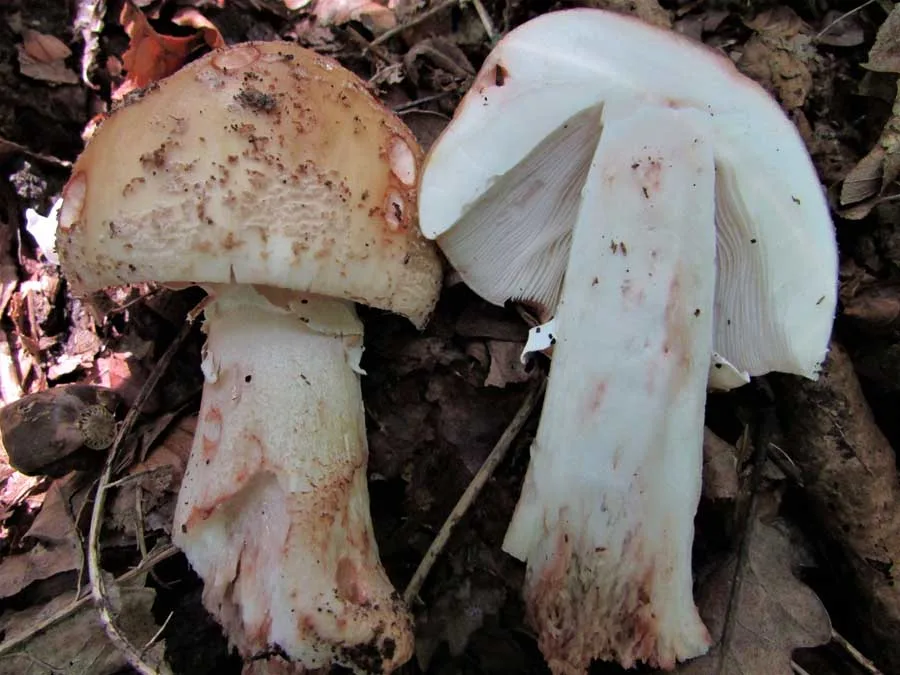
Flesh
White but ‘blushing’ pink to red when bruised or exposed to air.

Habitat
Mixed woodland. A. rubescens is common throughout much of Europe and Asia. It grows on poor soils as well as in deciduous and coniferous woodlands, appearing from June through to November in the United Kingdom. It has also been recorded from South Africa, where it is thought to have been accidentally introduced with trees imported from Europe.

Possible Confusion
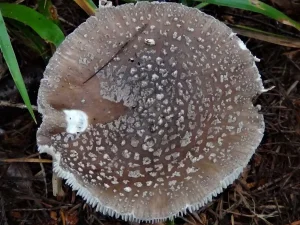
Can be confused with the toxic Panthercap (Amanita pantherina), pictured. The main difference is that the Blusher has lines or striations on its skirt running from the stem out, the Panthercap skirt is smooth. Other differences are the Blusher has a lighter cap, the scales on the cap are off-white to grey rather than white, the Blusher stem is bulbous at the bottom the Panthercap growing from a volval sack and has a rim or ‘gutter’ at the top of the volva (marginate) and finally, the Blusher ‘blushes’ red when damaged or exposed to air.
The Grey Spotted Amanita (Amanita excelsa), generally has a darker cap but is very similar looking but this should not be a problem as it is edible.
Care should be taken when identifying Amanitas.
Taste / Smell
Faint then becoming slightly acrid when fresh, tasty when cooked. Must be well cooked before eating as it contains a toxin that is destroyed when heated.
Other Facts
In eastern North America, species in the A. rubescens group are frequently parasitized by Hypomyces hyalinus. Parasitized fruiting bodies are extremely difficult to recognize unless they occur in conjunction with healthy ones, although some retain the “blushing” characteristic of the species.
A. rubescens is edible when cooked. A. rubescens contains a toxic hemolytic protein in its raw state, although it is not apparently harmful to consume and can be destroyed by cooking. It is noted in some mushroom books as poisonous, with David Pegler stating that if eaten raw in large quantities it can cause severe anaemia if left untreated; Pegler classifies it as a blood cell-damaging (haemolytic-poisoning) mushroom. It also resembles some toxic species.