Jubilee Waxcap
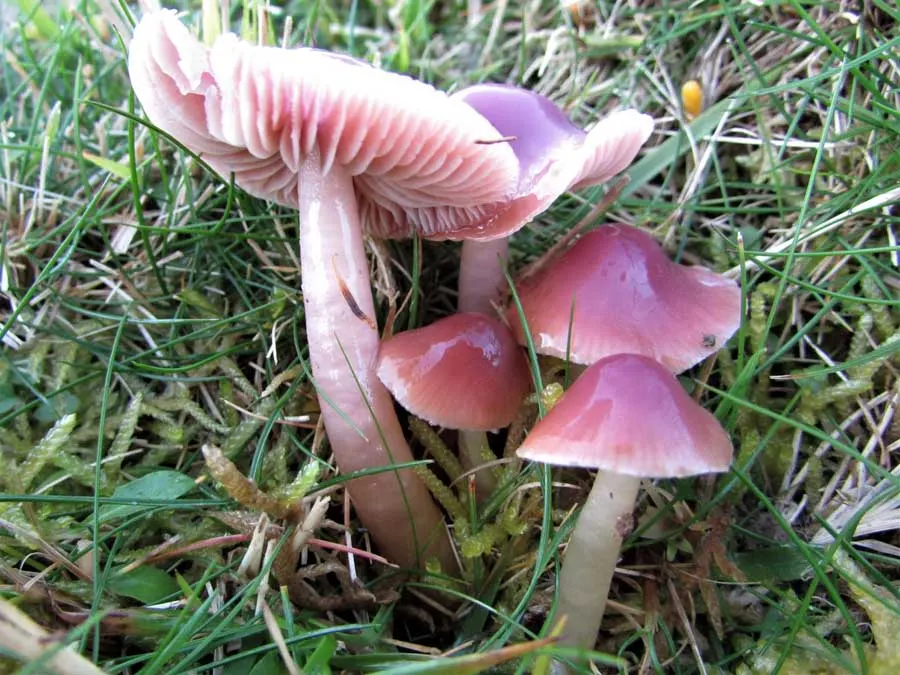


A rare and beautiful mushroom that should only be admired and photographed, never picked. It is a slimy, lilac/pink waxcap so easily identified and left in the field. I’m not sure of the edibility of this mushroom and as it is rare I have placed it in the inedible section.
Scientific Name – Hygrocybe / Gliophorus reginae

Common Names:
Jubilee Waxcap
Please note that each and every mushroom you come across may vary in appearance to these photos.

Cap
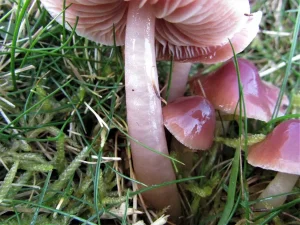
2-6 cm. Pink/lilac to a violet/purple the cap is slimy and starts convex but will flatten out retaining an umbo.

Gills
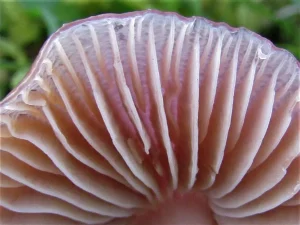
Pink/pale grey and widely spaced with transverse ‘gills’ running between the main gills often visible. The gills are broadly attached to the stem (adnate) to being notched before joining the stem (sinuate). Unlike the rest of the mushroom, the gills are not slimy.

Stem
1.5-7 cm long. 5-15 mm diameter. White to very pale pink, delicate and slimy.

Flesh
The flesh is concolourous with the outside, the stem is usually hollow.
Habitat
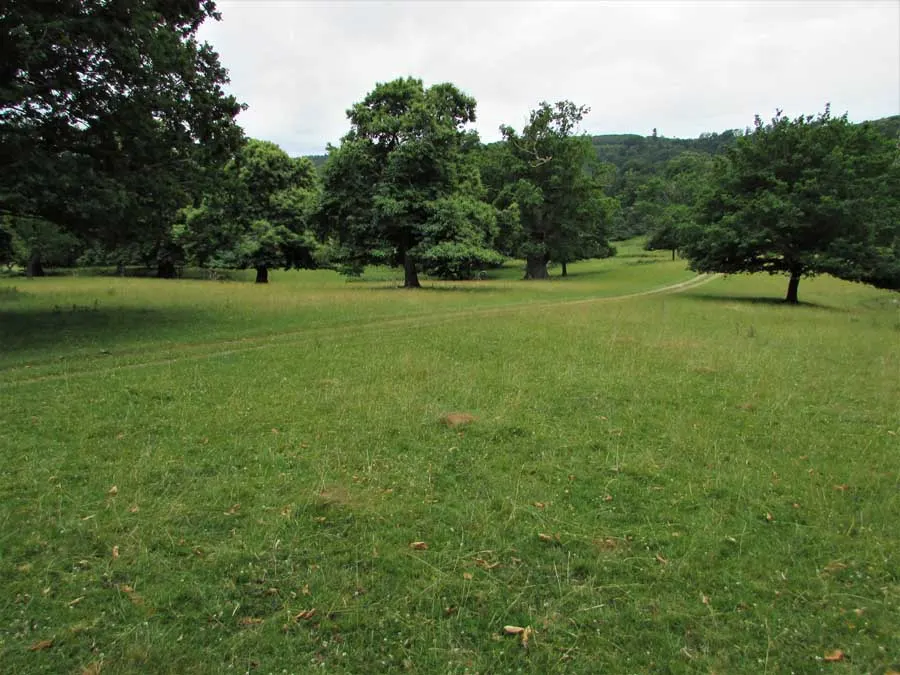
In unimproved grassland like fields and pastures or graveyards.

Possible Confusion
The Pink Waxcap (Porpolomopsis calyptriformis), pictured, but this is a paler more delicate pink, the cap is more conical and it is a greasy feeling mushroom, not slimy like the Jubilee Waxcap.
Other Facts
Waxcaps don’t like to be disturbed or sprayed so will be found where fields and woodland have been left alone. It is now thought that waxcaps grow in association with mosses, before it was thought that waxcaps were saprophytic living on decaying organic matter. The genus Gliophorus comes from the from Greek glia-, meaning glue, and the Latin –phorus from the Greek –phoros which means bearing: Gliophorus refers to the glue-like thick liquid that coats the caps, gills and stems of mushrooms in this genus.