Lion’s Mane


Hericium erinaceus, commonly known as lion’s mane, yamabushitake, bearded tooth fungus, or bearded hedgehog, is a species of tooth fungus. It tends to grow in a single clump with dangling spines longer than 1 centimetre. It can be mistaken for other Hericium species that grow in the same areas.
Scientific Name – Hericium erinaceus
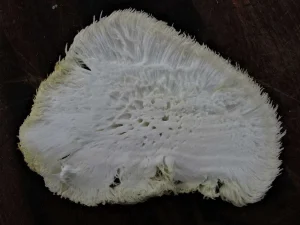

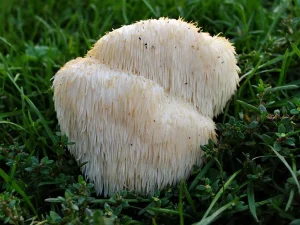
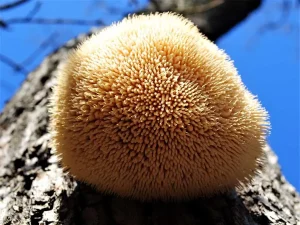
Common Names:
Bearded Tooth (EN), Lion’s Mane (US), Pom Pom mushroom (US), Pigau Barfog (CY), Soplówka Jeżowata (PL), Süngomba (HU)
Please note that each and every mushroom you come across may vary in appearance to these photos.

Fruiting Body
Typically spherical. White to cream coloured when young, yellowing then browning with age. The fruiting body is formed of 2–5 cm long, pendant spines.
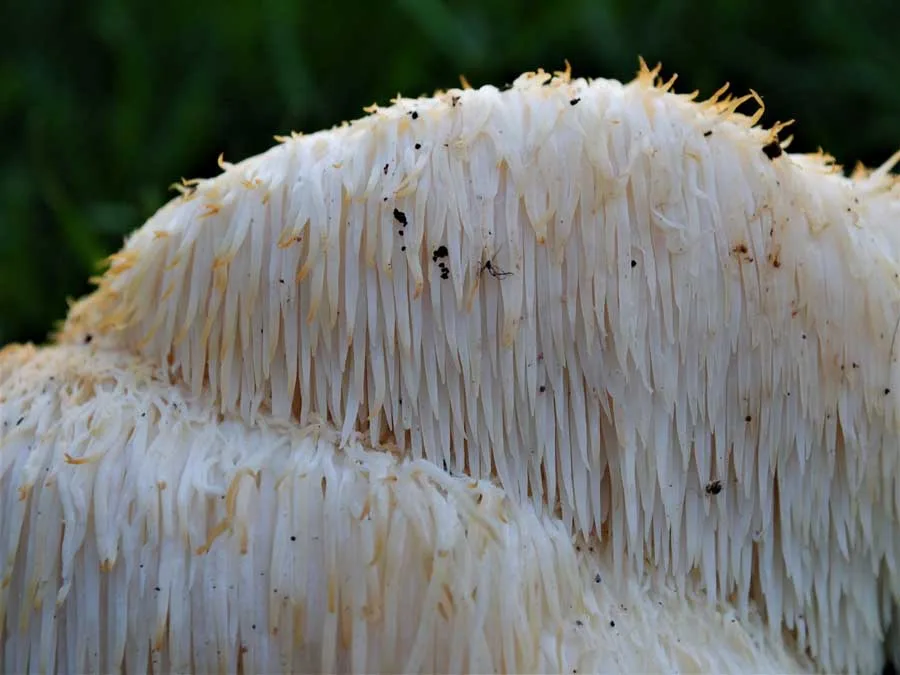
Spines
2–5 cm long, white to cream, pendant, growing in clusters. The spines are very soft and fragile.
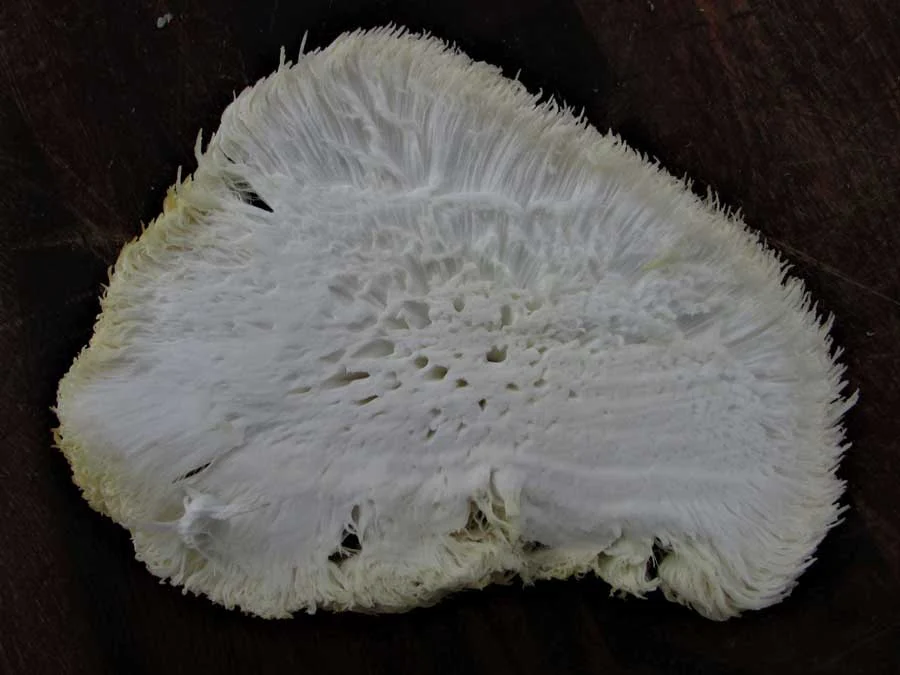
Flesh
White to cream, soft and spongy, toughening and yellowing with age.

Habitat
Hericium erinaceus, commonly known as lion’s mane mushroom, is a species of tooth fungus that grows on dead hardwood trees. It is recognized for its distinctive shaggy appearance, resembling a lion’s mane, and is known for both its culinary and medicinal uses, particularly in Asian countries like China and Japan. This mushroom is believed to have various health benefits, including potential neuroprotective effects and support for cognitive function. It typically fruits from late August to December and can be found on decaying trunks and branches in deciduous woodlands.
Possible Confusion
It could be confused with other members of the same genus, i.e. Tiered Tooth (Hericium cirrhatum), and Coral Tooth (Hericium coralloides), in Europe, or Bear’s Head (Hericium americanum) in the US, which was also called Lion’s Mane until recently.
Other Facts
It is a valued culinary mushroom and a well-known medicinal mushroom with many well-documented health benefits.
Because of the growing interest about this species, commercial strains are available for cultivation. Please note that most of them are from a foreign origin. Without taking sides, the potential environmental risks of foreign strains are still subject of heated scientific discussion.